
Psoriasis Treatment in Hyderabad
Chronic skin condition. Real relief. Our dermatologists at Dr Skin combine evidence-based therapies with personalised care plans to help you manage psoriasis in the long term.
Make an Appointment

Talk to a Skin Expert Today
What is Psoriasis?
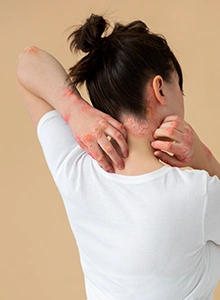
Psoriasis is a long-term autoimmune skin condition in which the immune system mistakenly accelerates the lifecycle of skin cells. Instead of completing their normal 28–30 day cycle, cells accumulate on the surface within just 3–4 days forming the red, thickened patches and silvery-white scales that characterise the condition.
It affects roughly 2–3% of the global population and can appear at any age, though it emerges commonly between the ages of 15 and 35. While psoriasis is not curable, it is very much treatable and manageable, and early intervention makes a significant difference in quality of life.
Important: Psoriasis is not contagious. It cannot spread through skin contact, sharing utensils, or any form of physical interaction.
Quick Facts About Psoriasis
- Caused by an overactive immune system, not a skin infection
- Affects the skin, nails, scalp, and in some cases joints
- Follows a cycle of flare-ups and remission periods
- Can be linked to other conditions such as diabetes and heart disease
- Stress, infections, and lifestyle factors act as key triggers
- Diagnosis is typically clinical; a biopsy is rarely needed
- Treatments range from topical creams to biologics depending on severity
Types of Psoriasis
Psoriasis is not one-size-fits-all. Different types present with distinct patterns, affected body areas, and levels of severity, each requiring a personalised treatment approach.
The types of psoriasis include:
Plaque Psoriasis
The most common form, characterised by raised, inflamed red patches covered with silvery-white scales. Most often appears on the elbows, knees, scalp, and lower back.
Scalp Psoriasis
Affects the scalp, ranging from fine, dandruff-like flaking to thick, crusted plaques. Scales may extend beyond the hairline onto the forehead, neck, and behind the ears, often causing significant itching.
Guttate Psoriasis
Appears as small, drop-shaped sores across the trunk, arms, and legs. Often triggered by a bacterial infection such as strep throat and is more common in children and young adults.
Inverse Psoriasis
Develops in skin folds such as the armpits, groin, and under the breasts. Presents as smooth, red, shiny patches rather than the typical scaly plaques, frequently worsened by friction and sweating.
Nail Psoriasis
Causes pitting, discolouration, abnormal nail growth, and in severe cases, separation of the nail from the nail bed.
Psoriatic Arthritis
A form of inflammatory arthritis that affects some people with psoriasis, causing joint pain, stiffness, and swelling. Can affect any joint in the body and may cause significant disability if left untreated.
Psoriasis Symptoms
Symptoms vary depending on the type and severity of psoriasis. Recognising them early helps you seek appropriate care before the condition worsens.
- Red, raised patches on the skin
- White or silvery scales covering the patches
- Dry, cracked skin that may bleed
- Itching, burning, or soreness
- Flaky scalp resembling severe dandruff
- Thickened, pitted, or ridged nails
- Swollen and stiff joints (in psoriatic arthritis)
When Should You See a Doctor?
You should consult a doctor if your symptoms are spreading beyond a small area, if they are interfering with your daily activities or sleep, if standard moisturisers and over-the-counter creams aren’t helping, or if you develop joint pain alongside your skin symptoms.
Early diagnosis and a targeted psoriasis treatment plan can significantly reduce flare-up frequency and improve long-term outcomes.
BOOK A SKIN CONSULTATION
Understanding Flare-Ups
Common Psoriasis Triggers
While psoriasis originates from immune system dysfunction, external factors, known as triggers, can provoke or worsen flare-ups. Identifying and avoiding your personal triggers is a cornerstone of long-term management.
Common psoriasis triggers include:
- Stress (both physical and emotional)
- Weather Changes like cold, dry climates
- Skin injuries such as cuts, rashes and sunburns
- Infections
- Smoking
- Alcohol
- Effects of certain medications
NOTE: Keeping a symptom diary can help you identify patterns in your flare-ups and provide your doctor with valuable information to refine your treatment plan.
Expert Care at Doctor Skin
Psoriasis Treatment Options in Hyderabad
There is no one-size-fits-all approach to treating psoriasis. At Dr Skin, our dermatologists assess the type, severity, and impact on your quality of life before recommending a treatment pathway tailored specifically to you.
Topical Treatments
The first line of care for mild to moderate psoriasis. Topical corticosteroids reduce inflammation and slow skin cell turnover. Vitamin D analogues, calcineurin inhibitors, coal tar, and salicylic acid formulations are also used depending on the affected area and severity. These are applied directly to the skin and are generally well tolerated for ongoing use under dermatological supervision.
Phototherapy (Light Therapy)
A highly effective option for moderate to severe psoriasis that hasn't responded adequately to topical treatments. Narrowband UVB phototherapy is the most widely used form; it slows abnormal skin cell growth, reduces inflammation, and can induce remission. Sessions are typically conducted two to three times per week under medical supervision. Psoralen combined with UVA (PUVA) therapy is also available for more extensive disease.
Oral Medications and Systemic Therapy
For moderate to severe psoriasis, oral systemic medications such as methotrexate, cyclosporine, and acitretin may be prescribed. These work throughout the body to address the immune system dysfunction underlying psoriasis. Newer oral treatments including PDE4 inhibitors and JAK inhibitors offer additional targeted options. Regular monitoring by your dermatologist is important with systemic therapy.
Lifestyle Management and Trigger Control
Effective management extends well beyond prescribed medications. Identifying and avoiding personal triggers, following a skin-friendly diet, maintaining a healthy weight, avoiding smoking and alcohol, managing stress, and consistent moisturization all play a meaningful role in reducing flare-up frequency and severity. Your dermatologist will guide you through evidence-based lifestyle strategies as part of a holistic treatment approach.
Personalised Treatment Plans
At Dr Skin in Hyderabad, no two psoriasis patients receive the same plan. Our dermatologists conduct a thorough assessment that considers your specific psoriasis type, affected body areas, previous treatment history, comorbidities, and lifestyle. From there, we design a structured, goal-oriented plan, combining therapies as needed and adjusting it over time as your skin responds. Regular follow-up appointments ensure your care remains optimal.
Best Psoriasis Treatment with Homeopathy in Hyderabad
Living with psoriasis isn’t easy. It can be exhausting, with discomfort that comes and goes. At our clinic in Hyderabad, we focus on understanding psoriasis as more than just a skin condition.
We offer the best homeopathy treatment for psoriasis by looking at each person’s skin history, lifestyle, and overall health. Homeopathy for psoriasis works by supporting the body’s natural healing process and addressing the root factors that cause flare-ups. Suppressing symptoms is not the solution for this.
Our approach is gentle, individualized, and long-term. We take time to understand your pattern of outbreaks, stress levels, digestion, and family history. This helps us create a personalized plan to manage flare-ups and support skin health and immunity.
If you have been searching for psoriasis treatment near me and want a holistic option, our team provides regular follow-ups to track progress and adjust treatment as needed. Many patients choose homeopathy because it focuses on root levels. Consult with the best psoriasis doctor in Hyderabad to understand your condition better and explore the best plan designed around you.
If you need a trusted homeopathy clinic nearby, we are here to support your healing journey.
Not Sure Which Treatment Is Right for You?
Book a consultation with a Dr Skin expert in Hyderabad. We’ll assess your condition and guide you through the best options for your skin.
Book A Consultation Today
Daily Management
Lifestyle Tips to Manage Psoriasis
Alongside medical treatment, consistent daily habits can have a profound effect on how often you experience flare-ups and how quickly your skin recovers.
Manage Stress: Practise mindfulness, yoga, or breathing exercises regularly. Stress is one of the most cited psoriasis triggers and reducing it can significantly decrease flare-up frequency.
Moisturise Regularly: Apply a fragrance-free, thick moisturiser twice daily to reduce dryness, cracking, and scaling. Moisturising right after bathing locks in hydration most effectively.
Eat a Healthy Diet: An anti-inflammatory diet rich in vegetables, fruits, omega-3 fatty acids, and wholegrains may help reduce systemic inflammation associated with psoriasis.
Prioritise Sleep: Adequate sleep supports immune regulation and tissue repair. Poor sleep quality is associated with increase in inflammatory markers and more severe skin symptoms.
Stay Hydrated: Drinking enough water throughout the day helps maintain skin barrier function and reduces the tendency towards excessive dryness and cracking.
Ready to Start Your Psoriasis Healing Journey?
Stop letting psoriasis control your life. Experience safe, natural, long-term relief through constitutional homeopathy.
Book Your Consultation
Frequently Asked Questions About Psoriasis
What is the main cause of psoriasis?
Is psoriasis contagious?
No. Psoriasis is not contagious and cannot spread through touching, hugging, sharing towels, or any physical contact. It is an autoimmune condition, not an infection.
Can psoriasis be cured permanently?
No, psoriasis cannot be cured permanently. It is a chronic autoimmune skin condition. However, with proper treatment and lifestyle management, many people achieve long-term remission and clear or nearly clear skin for extended periods.
What triggers psoriasis flare-ups?
Common psoriasis triggers include stress, cold weather, skin injuries, infections (such as strep throat), smoking, excessive alcohol consumption, and certain medications. Triggers vary from person to person.
Which doctor should I consult for psoriasis in Hyderabad?
You should consult a dermatologist for psoriasis diagnosis and treatment. At Doctor Skin, our experienced dermatologists provide personalized treatment plans and long-term care for all types of psoriasis.
Is psoriasis linked to other health conditions?
Yes. Psoriasis is associated with conditions such as psoriatic arthritis, type 2 diabetes, cardiovascular disease, metabolic syndrome, and inflammatory bowel disease. Comprehensive care helps manage both skin symptoms and overall health.